Current condition
Record the sample identity or drawing revision, supplier variant, incoming bulk condition, loading quantity, final pick requirement and acceptable clip condition. Keep those conditions with each trial observation.
Plan clip feeder acceptance around accepted clips at the pick point. Record bulk loading, nesting, orientation, damage, replenishment, jams and recovery.
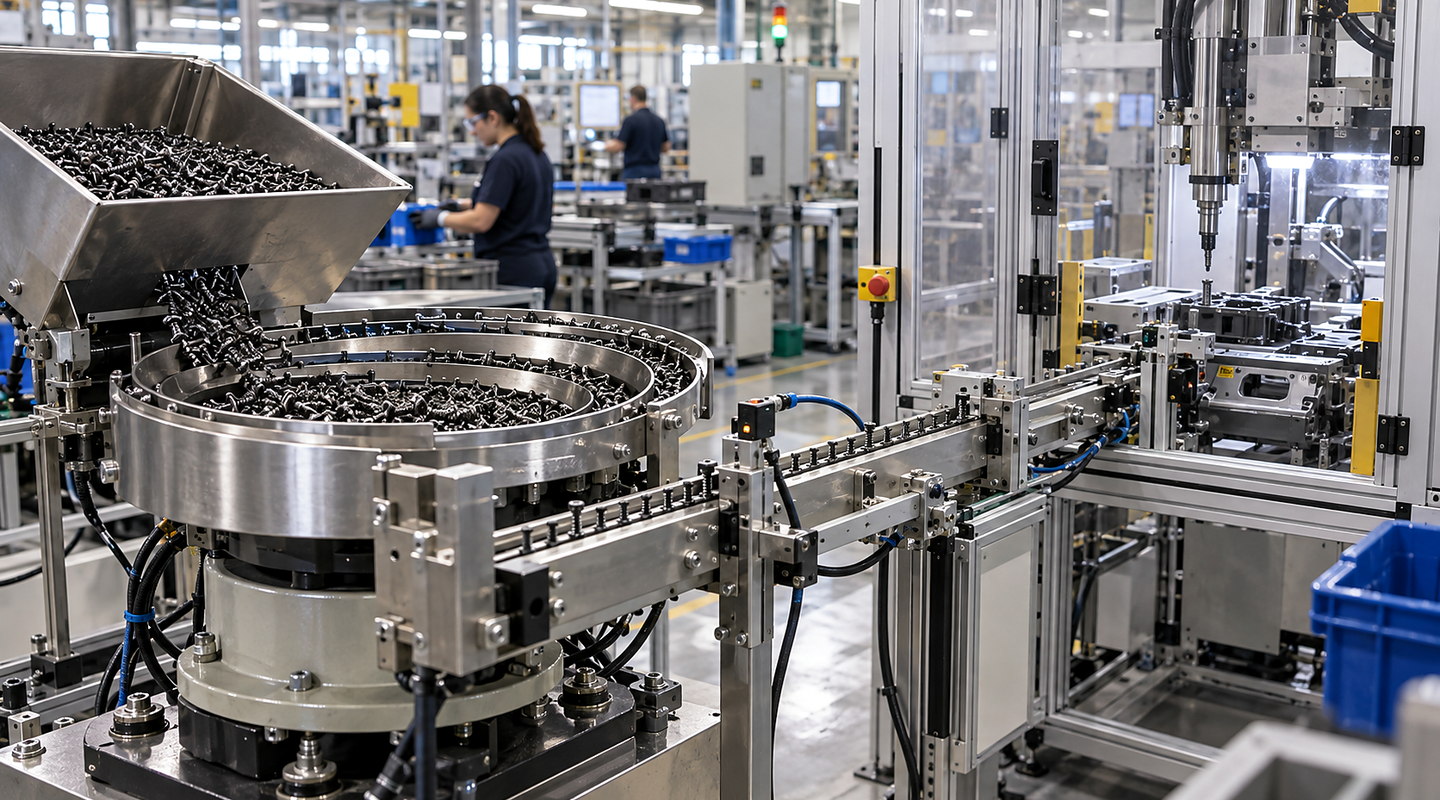
Photographs show general component feeding, including fasteners. Clip separation and orientation must be trialled with the actual clip range, bulk condition and required pick position.
Agree the clip range, bulk loading, final pick position and acceptable condition before the trial. Count only clips delivered in the agreed orientation and condition over the agreed period. Include realistic replenishment, unresolved pairs, damaged clips and representative jams, then record recovery and any open acceptance points.
Use the same selection evidence for each feeding option and define the escapement and downstream interface. Acceptance is based on the complete handover, not a quoted feeder maximum.
Plan clip feeding systems around real component variation, bulk condition, orientation, usable delivery rate and the downstream interface. Discuss representative part trials with Sorting Solutions. Use this guide to resolve jam, damage and recovery acceptance checks before it limits the final system.
Discuss your application

Record the sample identity or drawing revision, supplier variant, incoming bulk condition, loading quantity, final pick requirement and acceptable clip condition. Keep those conditions with each trial observation.
Use normal and marginal clips with realistic hooking, overlap, nesting or damage examples. Include representative bulk quantities, replenishment changes and the normal variation expected at the downstream pick position.
Record accepted clips and the trial period, unresolved pairs, unacceptable clip condition and interruptions at the pick point. Include the agreed response to representative jams and the observations showing return to normal delivery.
Identify the clip features that hook, overlap or nest and the geometry needed at the final pick position. Keep normal, marginal and supplier-variant samples traceable to the recorded result.
Agree acceptable surface and damage limits for the next process. Record tangled, paired or damaged examples and how unacceptable clips leave the feeding sequence.
Record representative incoming bulk quantities and condition. Include replenishment and realistic changes in loading so separation is assessed through the normal supply cycle.
Count clips that arrive at the final pick position in the agreed orientation and condition. Retain the count and agreed period alongside interruptions; nominal feeder output is a separate figure.
Check the actual escapement and downstream pick handover, including the relevant upstream and downstream states. Keep the required position and clip condition with the observed delivery result.
Include representative jams and recovery in the agreed trial method. Record repetitions, observed return to normal delivery, unacceptable parts and any conditions that still need resolving.