Clip Feeding Systems FAQs
Answers on clip feeder nesting, samples, usable delivery and jam recovery. Learn what to send Sorting Solutions and what a representative trial must show.
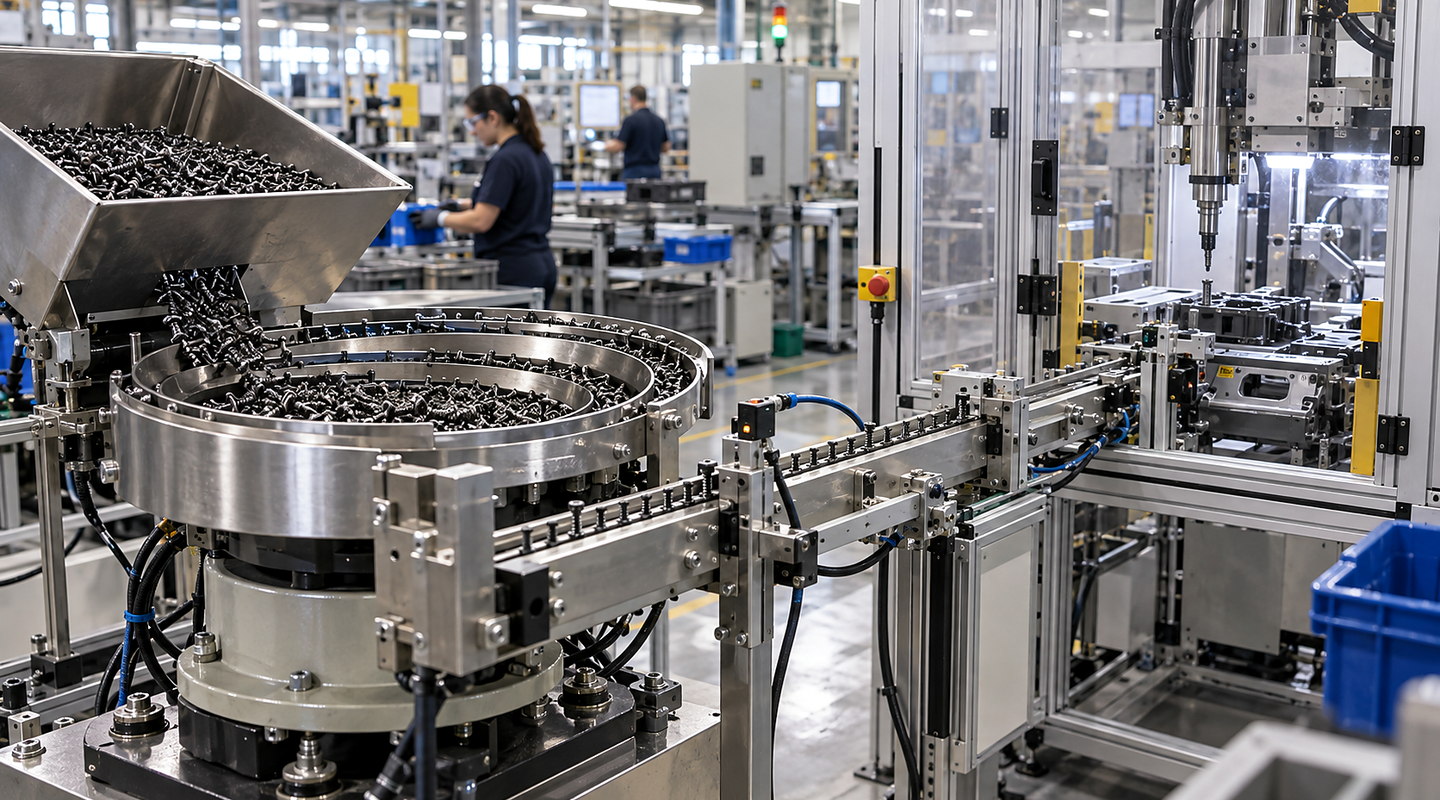
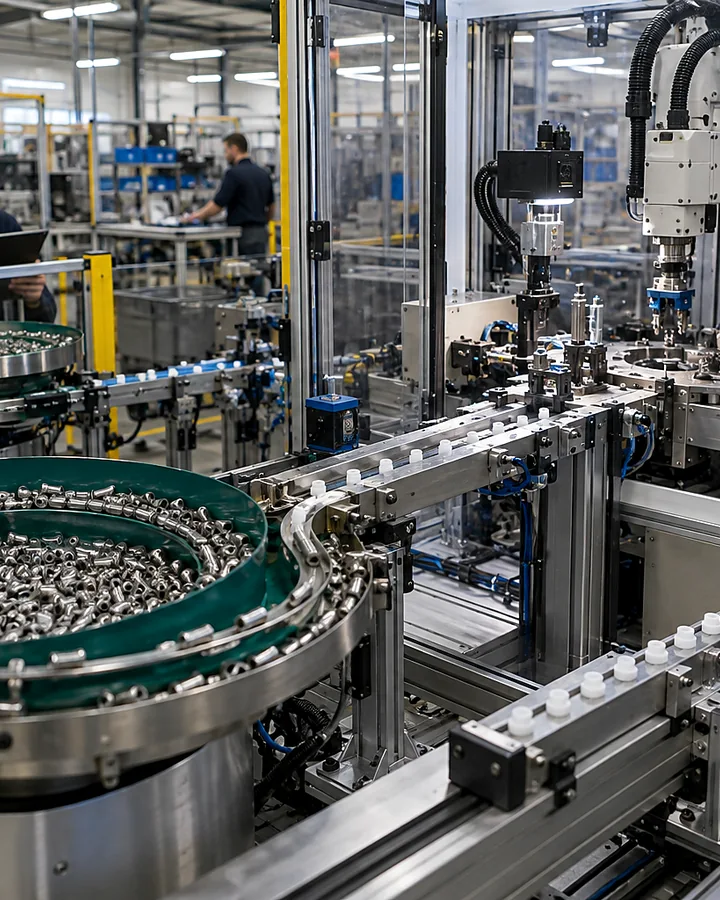
Photographs show general component feeding, including fasteners. Clip separation and orientation must be trialled with the actual clip range, bulk condition and required pick position.
Clip feeder suitability depends on whether real production clips can be separated and delivered in the required orientation and condition. Hooking, overlap, nesting, loading changes and jam recovery need representative trials; a nominal feeder speed does not establish accepted delivery at the pick point.
Review the trial sequence and rate and recovery checklist before comparing proposals. Photographs here show general component feeding; suitability for the actual clip range must be demonstrated.
Get practical answers for your application — Clip Feeding Systems
Plan clip feeding systems around real component variation, bulk condition, orientation, usable delivery rate and the downstream interface. Discuss representative part trials with Sorting Solutions. The answers below explain suitable applications for Clip Feeding Systems, what information helps and what still needs an application-specific check.
Discuss your application
Practical answers about clip feeding systems
How can we prevent clips from nesting or tangling in a feeder?
Identify the clip features that hook, overlap or nest, then trial representative bulk quantities in their normal incoming condition. Compare separation and orientation at the final pick position, including acceptable surface condition and removal of unresolved pairs or damaged clips. The trial must establish suitability for the actual clip range.
How should a project for clip feeding systems begin?
Collect normal, marginal and supplier-variant clips with relevant drawings or revisions. Define the required orientation, final pick position, acceptable clip condition, usable delivery rate and relevant downstream interface before selecting the feeding concept.
Can you quote clip feeding systems from a short description?
An early budget range may be possible, but a reliable scope for bulk presentation using clip separation and orientation needs the product or part range, line connections, site conditions and your requirements for jam, damage and recovery acceptance checks.
What information should we send about clip feeding systems?
Send authorised clip drawings or photographs, representative production examples, incoming bulk quantities and condition, known hooking or nesting behaviour, the required pick geometry and your production pattern. Include space, line connections and known quality or safety requirements.
How will performance be checked?
Agree the trial method, period, repetitions and acceptance limits first. Count clips delivered at the downstream pick point in the agreed orientation and condition, then include realistic replenishment, representative jams and recovery. Record unacceptable clips, unresolved pairs and open points alongside accepted delivery.
What are the main limitations?
Sample trials must include normal, marginal and supplier-variant components. Quoted feeder output is not the same as usable delivery at the downstream process. Fragile, flexible, magnetic or entangling parts may need a different presentation method.
What alternatives should be considered for bulk presentation using clip separation and orientation?
Compare flexible vision-guided feeding for suitable variable part families with manual or tray presentation where bulk feeding would damage parts or add unjustified complexity. For Clip Feeding Systems, the practical option may be simpler than the most automated one.
Can the proposed solution guarantee regulatory compliance?
No solution can guarantee compliance on its own. Applicable law, current standards, risk assessment, validation and conformity responsibilities must be addressed for your complete application.
Who will handle my enquiry?
Sorting Solutions will receive enquiries from clipfeedingsystems.co.uk. Call 01844 617223 or email sales@sortationsolutions.co.uk to speak with the team directly.