Plan clip feeding systems around real component variation, bulk condition, orientation, usable delivery rate and the downstream interface. Discuss representative part trials with Sorting Solutions.
Speak directly with Sorting Solutions about clip separation and orientation.
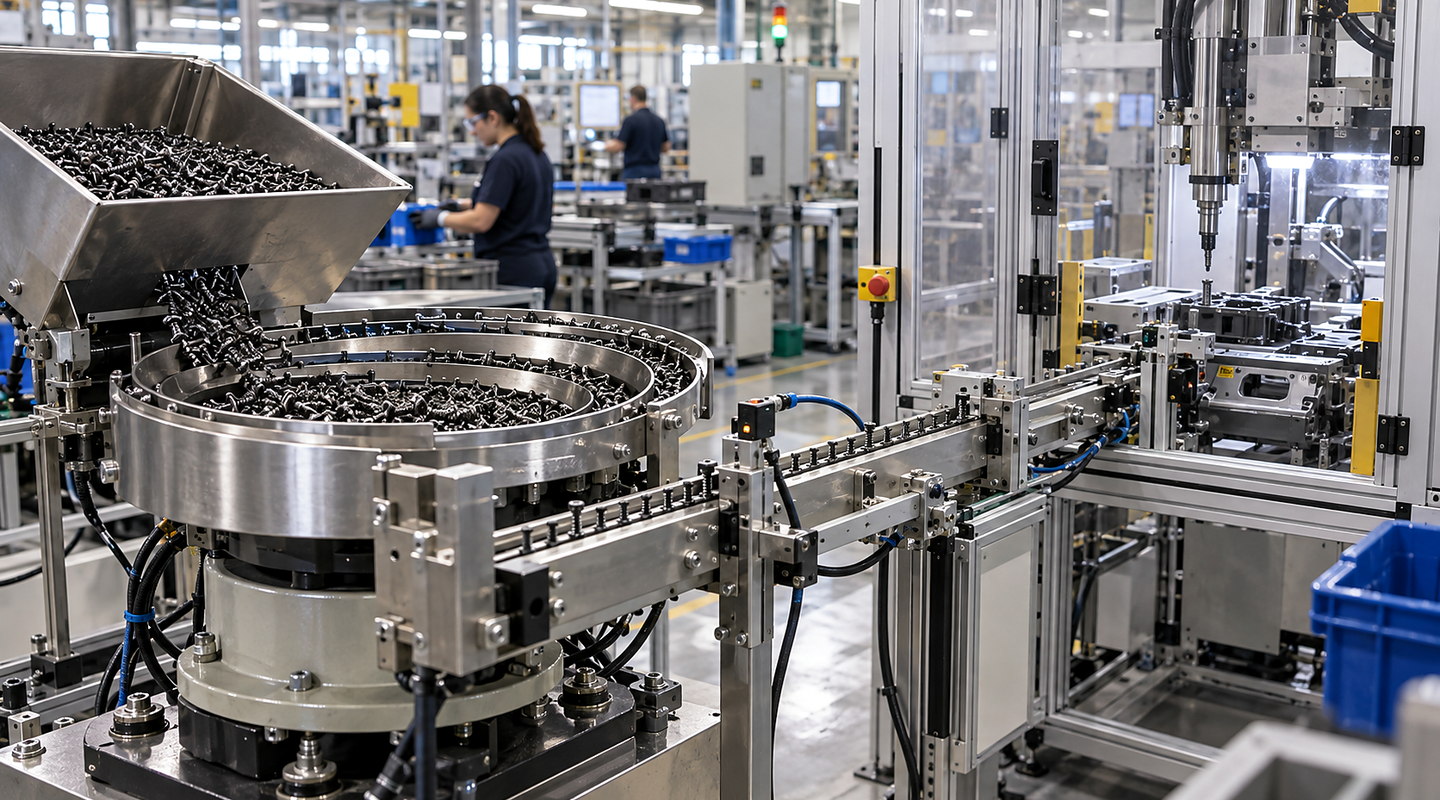
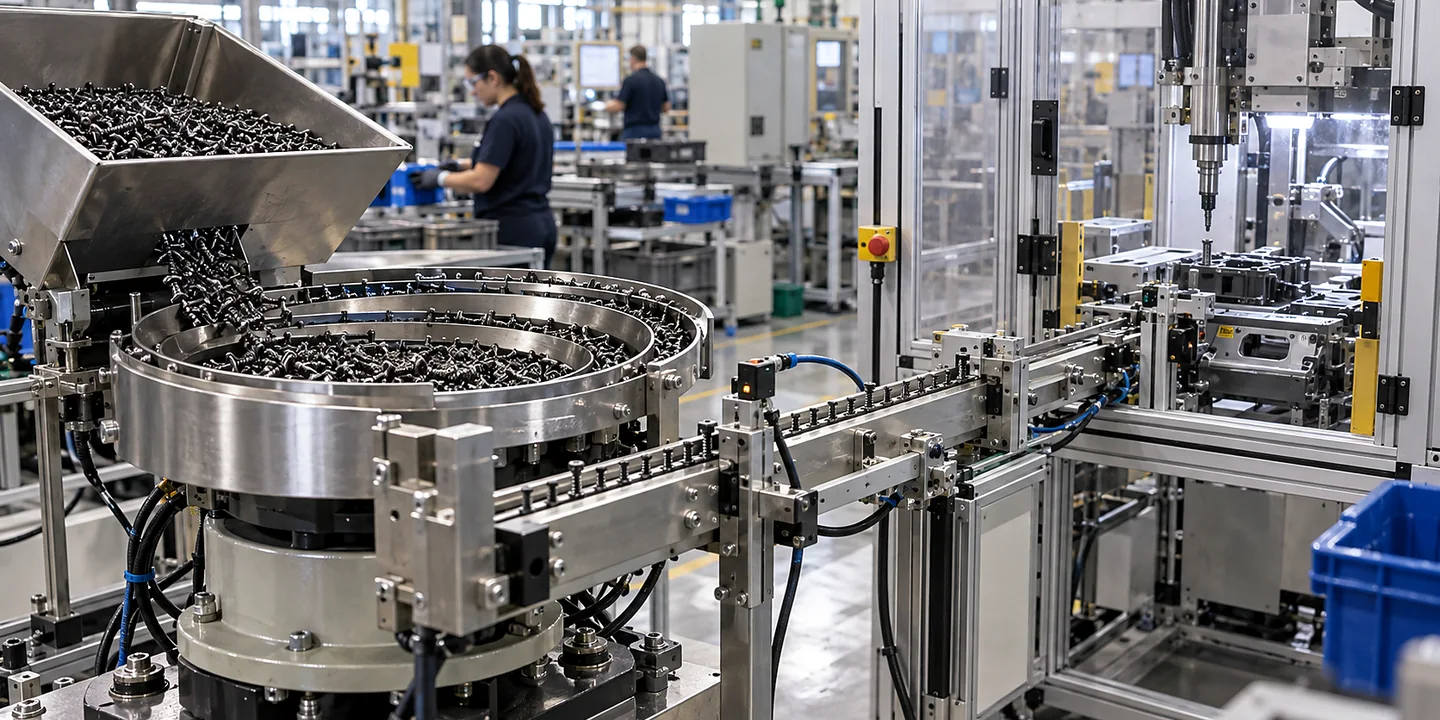
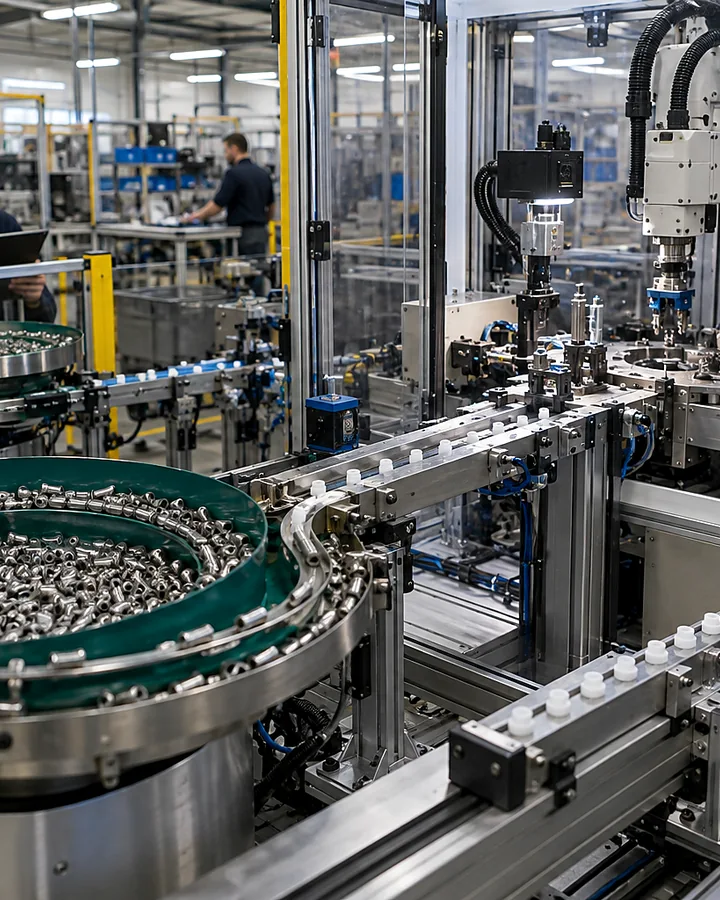
Photographs show general component feeding, including fasteners. Clip separation and orientation must be trialled with the actual clip range, bulk condition and required pick position.
Quick answer
How can we prevent clips from nesting or tangling in a feeder?
Identify which clip features hook, overlap or nest when parts are loaded together. Use representative bulk quantities to compare separation and orientation concepts. The assessment should include the final pick position, acceptable surface condition and how an unresolved pair or damaged clip is removed from the feeding sequence.
Six useful questions
Describe what you need from clip feeding systems before choosing a solution
For bulk presentation using clip separation and orientation, share the normal condition, realistic range and difficult cases the finished system must handle.
Question 1
Component Geometry and Variation for Clip Separation & Orientation
Supply representative normal, marginal and supplier-variant clips, with relevant drawings or revisions. Identify the features that can hook, overlap or nest, and the geometry needed at the final pick position.
Question 2
Surface, Fragility and Entanglement Behaviour
Agree the surface condition that the downstream process can accept. Include realistic tangling and damaged-clip examples when comparing separation concepts, and define how unacceptable parts are removed.
Question 3
Bulk Condition and Replenishment Method
Use representative bulk quantities in the condition in which clips arrive. Describe replenishment and include realistic changes in loading when checking whether clips separate or remain nested.
Question 4
Required Orientation and Delivery Rate
Define the required orientation and usable delivery rate at the final pick position. Count clips that arrive in the agreed condition, rather than treating quoted feeder output as accepted delivery.
Question 5
Escapement and Downstream Pick Interface
Describe the escapement and downstream pick interface, including relevant upstream and downstream states. Trial the final presentation so orientation, position and surface condition are assessed at the actual handover.
Question 6
Jam, Damage and Recovery Acceptance Checks
Agree how unresolved pairs and damaged clips leave the feeding sequence. Include representative jams and recovery in the trial, with a checking method and result record for the return to normal delivery.
Applications
Two useful starting points for clip feeding systems
The right choice changes with component geometry and variation for clip separation & orientation, surface, fragility and entanglement behaviour, your line layout and required results.
Your route from an initial enquiry to a working solution
You can review decisions about escapement and downstream pick interface and jam, damage and recovery acceptance checks at each stage.
01
Review Representative Production Components
Share representative production components and the downstream interface, including the normal range for component geometry and variation for clip separation & orientation and the difficult surface, fragility and entanglement behaviour cases.
02
Trial Separation, Orientation and Presentation
Compare suitable methods and use focused trials to show how each option performs against bulk condition and replenishment method.
03
Develop Tooling, Controls and the Downstream Interface
Connect the equipment to your line, services and controls while resolving required orientation and delivery rate for day-to-day operation.
04
Challenge Delivery, Replenishment, Jams and Recovery
Confirm escapement and downstream pick interface, then complete and record jam, damage and recovery acceptance checks before your operating team takes over.
Important limits
Know what needs a separate check
Sample trials must include normal, marginal and supplier-variant components.
Quoted feeder output is not the same as usable delivery at the downstream process.
Fragile, flexible, magnetic or entangling parts may need a different presentation method.
Your final solution for clip separation and orientation must reflect the law, current standards and site-specific risks that apply to your installation.